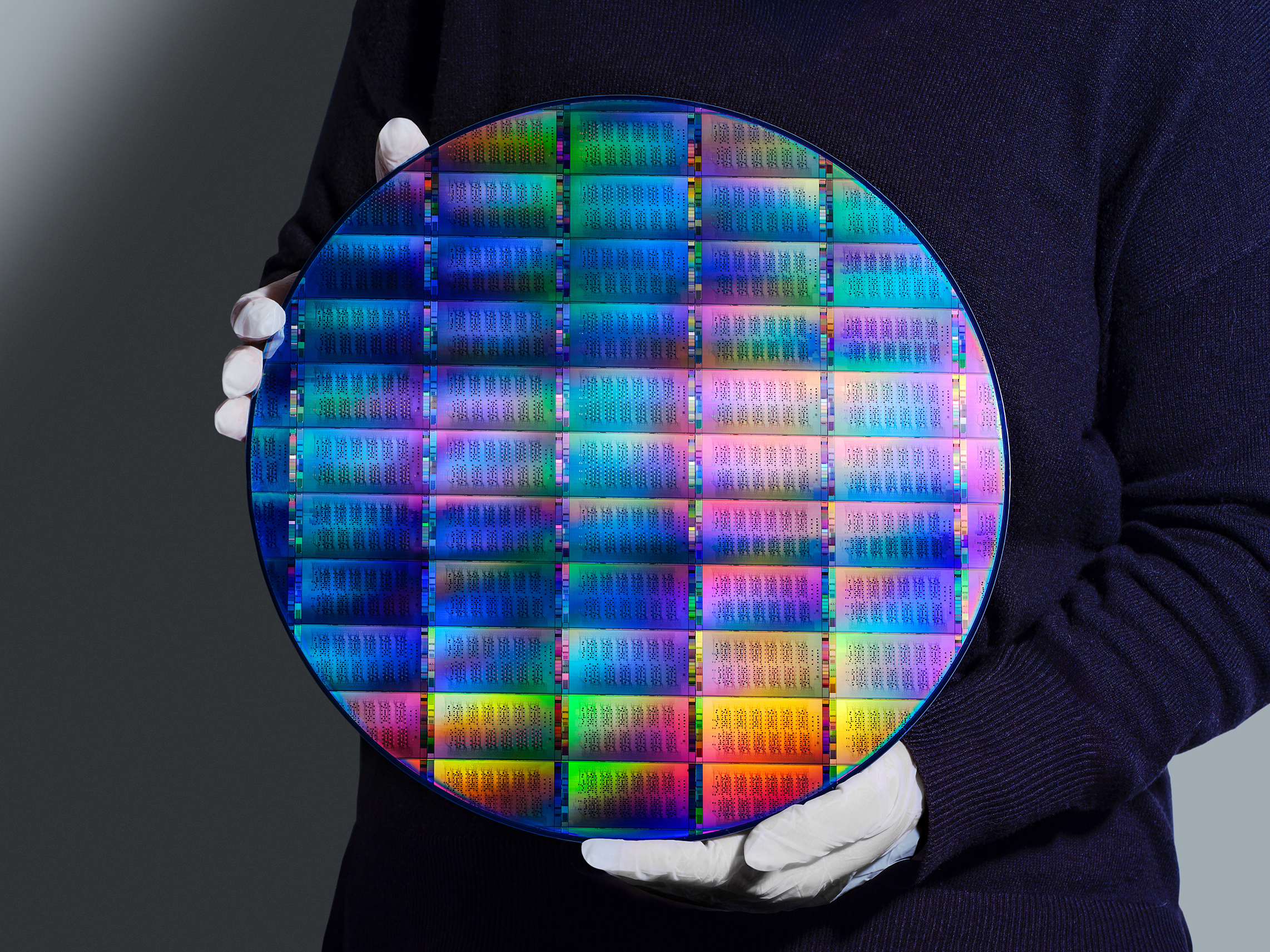

In these systems, each atom acts as a qubit. The ability to arrange large numbers of atoms with very few defects is essential for both analog and digital quantum computation. It is also a signal that neutral atom platforms are moving closer to the scale required for tangible applications.
Why this milestone is important
Scaling is one of the central challenges in quantum computing. More qubits create the possibility to simulate larger physical systems, solve more complex optimisation problems, and build the overhead required for error correction.
Pasqal had previously demonstrated defect-free 506-atom registers. By moving to 1024 atoms, the company has effectively doubled the size of its defect-free arrays and shown that its approach can scale to the thousand-atom level.
This is important because neutral atom systems are especially promising for applications where flexible, reconfigurable qubit layouts can create new computational possibilities.
Building larger, cleaner arrays
Reaching this scale required solving several technical challenges. Pasqal combined two trapping lasers to generate more than 2000 optical traps for loading atoms, while also redesigning its cryogenic platform to improve vacuum quality and extend atom lifetimes.
The result is a system capable of preparing 1024-atom registers with very low defect rates. According to Pasqal, around 10% of runs produce fully defect-free arrays, while 95% have fewer than 0.5% defects. The platform also achieved atom trapping lifetimes of around 5000 seconds, or roughly 80 minutes.
A step toward fault-tolerant quantum computing
For digital quantum computing, scale is not only about having more qubits. It is also about creating enough overhead to protect fragile quantum information through error correction.
Large neutral atom arrays could support the development of logical qubits, where many physical qubits are combined to create more reliable units of computation. This is an important step toward fault-tolerant quantum computing, where systems can run longer and more complex calculations despite errors.
A signal for the quantum ecosystem
This milestone is a strong example of how quantum hardware is moving from isolated demonstrations toward increasingly capable systems. For researchers, businesses, and policymakers, it shows why sustained investment in quantum technologies, talent, infrastructure, and ecosystem collaboration is important.
For Belgium’s quantum community, developments like this help sharpen the conversation around readiness: how do we connect research, industry, and society so that advances in hardware can translate into use cases, skills, and long-term impact?
Scaling continues
There is still a long road ahead before quantum computers can deliver broad practical advantage. But Pasqal’s 1024-atom milestone is an important proof point.
It shows that large, defect-free neutral atom arrays are becoming part of today’s quantum reality, bringing the field one step closer to making quantum work.